

6. Professional Help For Anxiety
Exploring Professional Help For Anxiety: When To Reach Out & What To Expect

Many people live with anxiety far longer than they need to, not because help is unavailable, but because it is hard to know when the line has been crossed from ordinary stress into something worth treating — and because reaching out can itself feel daunting.
When To Reach Out
A useful guide is impact. If anxiety is interfering with your sleep, your relationships, your work, or your ability to do things you used to do — or if you find yourself increasingly avoiding situations, or relying on alcohol or other means to manage it — it is worth speaking to someone. You do not need to wait until things become unbearable. In fact, anxiety is generally more responsive to treatment earlier, before avoidance and the patterns around it have become deeply entrenched. You are also not required to justify the severity of your struggle in order to deserve help.
What To Actually Expect
People often arrive with the expectation that they will be told what to do, or handed a quick technique. Good therapy for anxiety is a little different. It begins with understanding — building a clear picture of how your particular anxiety works, what feeds it, and what keeps it going. From there, the work is active and collaborative: learning to respond differently to anxious thoughts and sensations, and, where relevant, gradually and safely facing what has been avoided. It is a steady process rather than an instant one, but it is one that produces real and durable change.
What To Look For In A Clinician
It is entirely reasonable to want a clinician who takes the full complexity of your situation seriously — someone who will assess properly rather than reach for a label, and who works with an approach that has evidence behind it. The relationship matters too. Feeling safe enough to be honest with the person you are working with is not a luxury; it is part of what makes the work effective. A clinician able to make the practical referrals where medication may be necessary could prove helpful, too.
A Final Word
Anxiety can be convincing. It tells people that they are weak, that they should be able to manage on their own, that reaching out is an admission of failure. None of that is true. Seeking help for anxiety is not a sign that you cannot cope — it is one of the more capable things a person can do. And because anxiety responds so well to treatment, it is very often the beginning of feeling genuinely better, not just managing to get by.
Related Resources:
For an overview of psychological support and related MJT services, visit the Anxiety page.
Related Reading:

5. What Actually Helps Anxiety
Exploring What Actually Helps Anxiety & Getting The Fit Right

The good news, and it is worth stating plainly, is that anxiety is one of the most treatable conditions in mental health. That does not mean it is quick or effortless to treat, but the evidence base is strong and the outlook for someone who engages with good treatment is genuinely hopeful.
Psychotherapy
Talking therapy is the foundation of anxiety treatment, and several approaches have solid evidence behind them. Cognitive behavioural therapy helps people identify and shift the patterns of thinking and avoidance that keep anxiety going. Exposure-based work, done gradually and with support, helps the nervous system relearn that feared situations are survivable — this is often the single most powerful element for phobias, panic, and social anxiety. Acceptance and commitment therapy takes a different but complementary angle, helping people relate to anxious thoughts and sensations differently rather than fighting to eliminate them, and reorient toward what genuinely matters to them.
What these approaches share is that they do not aim to talk you out of anxiety or simply reassure it away. They work by changing your relationship to fear itself — and that change tends to hold.
Medication
For some people, particularly where anxiety is severe or accompanied by depression, medication has an important role. Certain antidepressants are effective and well-established treatments for anxiety, not only for low mood. Medication is a decision to make with a doctor, weighing the individual picture. It is often most effective not as a standalone fix but alongside psychological work, which addresses the patterns underneath. This is general information, not medical advice; decisions about medication should be made with a prescribing doctor.
Lifestyle & Nervous System
The everyday foundations matter more than they are often given credit for. Sleep, regular physical activity, moderating caffeine and alcohol, and practices that genuinely down-regulate the nervous system — slow breathing, mindfulness, time that is not spent achieving — all influence how reactive the threat system is. Healthy daily routines, meaningful social connection, regular outdoor time, purposeful engagement in personal interests or community involvement, trying a new hobby or sport - these seemingly insignificant aspects matter to your nervous system. While lifestyle approaches aren’t necessarily a substitute for treatment in severe anxiety, they can significantly shift the baseline the treatment is working from.
Getting The Fit Right
No single approach suits everyone, and the right treatment depends on the form of anxiety, its severity, and the person. What matters most is finding an approach and a practitioner that fit, and giving the process time. Anxiety that has built over years rarely resolves in a fortnight — but with the right help, it very often resolves. That is the part worth holding on to.
Related Resources:
For an overview of psychological support and related MJT services, visit the Anxiety page.
Related Reading:

4. Anxiety In The Body
Exploring The Physical Effects of Anxiety & Why It Matters

We tend to talk about anxiety as a mental condition, but it is registered in the body as much as in the mind — and for a great many people, the body is where anxiety announces itself first. It is common to see people who have been investigated repeatedly for physical complaints before anyone considers that anxiety might be the driver.
The Body Speaks
When the threat response activates, it produces a cascade of physical effects: a faster heart rate, quicker or shallower breathing, muscle tension, a churning or unsettled stomach, sweating, dizziness, a dry mouth. These are not imagined and they are not signs of weakness. They are the predictable output of a nervous system preparing for action. The difficulty is that when there is no lion to run from, these sensations have nowhere to go — and they become frightening in their own right.
Symptoms Under Investigation
Anxiety frequently presents as physical problems that send people to their GP rather than a psychologist: persistent fatigue, headaches, chest tightness, palpitations, digestive complaints such as irritable bowel, unrefreshing sleep, and vague aches. Each of these deserves proper medical assessment — anxiety should never be assumed before physical causes are considered. But when investigations come back clear and the symptoms persist, an anxious nervous system is often the missing explanation.
The Feedback Loop
Part of what makes bodily anxiety so persistent is the loop it creates. A physical sensation is noticed. It is interpreted as a sign that something is wrong. That interpretation increases anxiety, which intensifies the sensation, which seems to confirm the fear. The body and the mind escalate each other. Breaking that loop — often by changing how the sensations are understood and responded to, rather than by trying to eliminate them — is central to recovery.
Why This Matters
Recognising the physical face of anxiety matters for two reasons. For the person experiencing it, understanding that a pounding heart or a tight chest is a false alarm rather than a catastrophe can itself reduce the fear that fuels it. And for anyone supporting them — including clinicians — it is a reminder that the person presenting with unexplained physical symptoms, seen across multiple appointments with no clear cause found, may be carrying an anxiety that no one has yet named. The body is often telling a story the words have not yet reached.
Related Resources:
For an overview of psychological support and related MJT services, visit the Anxiety page.
Related Reading:
3. High-Functioning Anxiety
Exploring The Nature of High Functioning Anxiety & Why It Deserves Attention
When Coping Well Hides the Cost
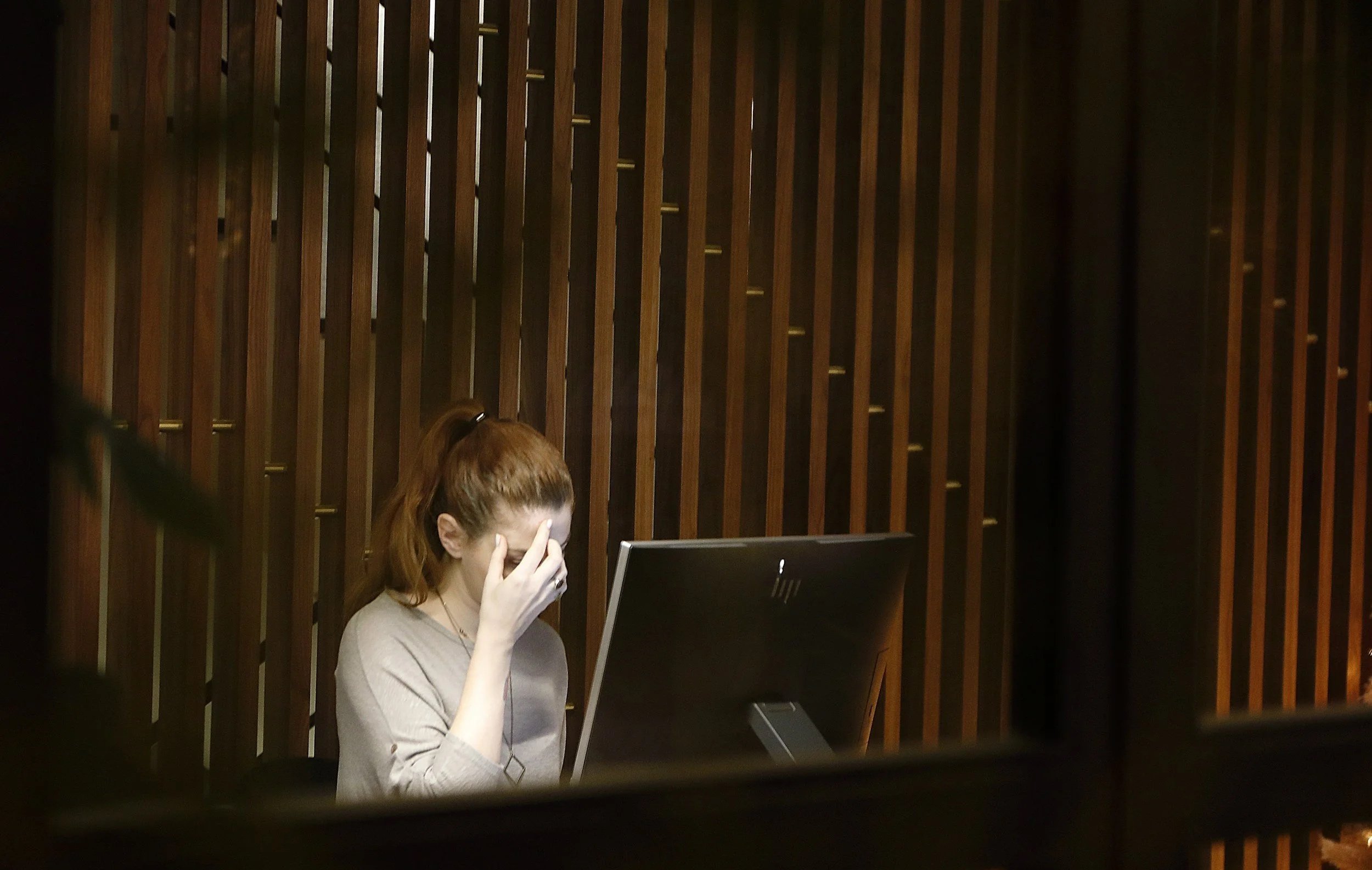
Some of the most anxious people are also the most outwardly successful. This is one of the most commonly missed presentations of anxiety, precisely because from the outside it does not look like distress at all. It looks like competence.
High-functioning anxiety tends to appear as reliability, over-preparation, and being the person everyone counts on. The work gets done, often to a high standard. Deadlines are met. Responsibilities are held. And so no one — sometimes not even the person themselves — thinks to ask what it is costing underneath.
The Cost Is Usually Invisible, Until It Isn't
Beneath the capable exterior there is often chronic hypervigilance, difficulty resting even when there is genuinely nothing left to do, and a nervous system that treats "good enough" as a threat. Many people with this presentation do not come to a consulting room saying they are anxious. They come in exhausted, with physical symptoms, with disturbed sleep, or quietly puzzled about why success does not feel like relief.
Because they are coping well by every external measure, this presentation is easy to miss in a brief consultation and easy for the person to dismiss as simply "how I am." Perfectionism gets read as ambition. Over-functioning gets read as dedication. Irritability at home gets explained away as the pressure of a demanding job.
The Key Marker
The clinical marker of high-functioning anxiety isn’t distress; it is the absence of rest. Someone who cannot tolerate stillness without discomfort is often not calm — they are managing something, very effectively, at a cost that eventually comes due. The tell is often not how badly they are doing, but the gap between how well they appear to be functioning and how they actually feel.
Why It Deserves Attention
Left unaddressed, high-functioning anxiety tends not to stay stable. It commonly progresses toward burnout, or collapses into depression, or drives the quiet use of alcohol to "take the edge off" at the end of the day. Treatment is not about asking someone to be less capable or less ambitious. It is about helping the body and mind learn that they are safe when there is no real threat — that rest is not a risk, and that worth does not have to be continually earned. For people who have lived in a state of low-grade alarm for years, that can be a profound and lasting shift.
Related Resources:
For an overview of psychological support and related MJT services, visit the Anxiety page.
Related Reading:
2. The Many Faces of Anxiety
Exploring The Multiple Faces of Anxiety: Common Experiences & Types
One of the reasons anxiety is so often missed is that it does not have a single face. People expect anxiety to look like visible panic or obvious fearfulness. In practice, it takes a number of quite different forms, and many people who are genuinely struggling almost never use the word “anxiety” to describe their experience. Common presentations or types include:
Generalised Anxiety
This is the free-floating, hard-to-switch-off worry that attaches itself to one concern after another. Health, money, work, relationships, the future — the specific subject changes, but the underlying state of apprehension does not. People with generalised anxiety often describe feeling on edge much of the time, struggling to relax, and being told they "worry too much," as if it were a choice.
Panic
Panic is anxiety at its most acute: sudden, intense surges of fear accompanied by strong physical symptoms — a racing heart, breathlessness, dizziness, a sense of unreality or of losing control. Because the physical symptoms are so powerful, panic is frequently mistaken for a heart or breathing problem, and many people first present at an emergency room rather than a consulting room.
Social Anxiety
Social anxiety is a persistent fear of being judged, scrutinised, or humiliated in front of others. It is far more than shyness. It can quietly shrink a life — declined invitations, avoided meetings, opportunities not taken — all to sidestep the discomfort of being watched. Because the avoidance is often invisible, the cost is easy to underestimate from the outside.
Health Anxiety
Here the worry fixes on the body and on illness. A normal bodily sensation is interpreted as a sign of something serious, prompting repeated checking, reassurance-seeking, or medical visits that provide only temporary relief. It is a genuinely distressing condition, and one that is often misread as simply being "difficult" or over-demanding.
Phobias & Specific Fears
A phobia is an intense, disproportionate fear of a specific object or situation — flying, heights, needles, enclosed spaces. What defines it clinically is not the fear itself but the lengths a person will go to in order to avoid the feared thing, and the impact that avoidance has.
Why Distinctions Matter
These forms overlap, and it is common to experience more than one. They also frequently travel alongside depression, trauma, or substance use, which can obscure the picture further. The distinctions matter because they point toward different treatment emphases. But the common thread is the same throughout: a threat-response system firing when it does not need to. Naming the specific pattern is often the moment a person realises that what they are experiencing is recognised, understood, and treatable.
Related Resources:
For an overview of psychological support and related MJT services, visit the Anxiety page.
Related Reading:
1. Understanding Anxiety
Exploring Anxiety: What It Is & Why We Have It
What It Is & Why We Have It
Almost everyone will describe themselves as anxious at some point. Before an interview, a medical result, a difficult conversation. In that everyday sense, anxiety is not a disorder at all. It is one of the most useful things the human body does.
Anxiety is the body's threat-detection system doing its job. Faced with something it reads as dangerous, the nervous system prepares you to respond: heart rate rises, attention narrows, muscles ready themselves. For most of human history this kept us alive. The problem is not that we have this system. The problem is when it becomes overactive, stays switched on when there is no real threat, or fires so intensely that it interferes with living.
Normal versus Clinical Anxiety
The line between ordinary worry and an anxiety disorder is not about whether you feel anxious, but about proportion, persistence, and cost. Ordinary anxiety is proportionate to the situation, settles once the situation passes, and does not stop you living your life. Clinical anxiety is out of proportion to the actual threat, persists well beyond the trigger, and begins to shape decisions — what you avoid, what you cannot stop thinking about, what you no longer do.
A helpful question is not "Am I anxious?" but "Is my anxiety still working for me, or has it started working against me?" A system meant to protect you has, in a clinical presentation, started to limit you instead.
Why It Often Feels So Physical
Anxiety is often described as a thinking problem, but it is felt in the body first. The racing heart, the tight chest, the churning stomach, the restlessness — these are not signs that something is medically wrong in that moment. They are the threat response doing exactly what it evolved to do, simply at the wrong time.
Understanding this does not make the sensations vanish, but it changes their meaning. A pounding heart is frightening if you believe something is wrong with you. It is far less frightening once you understand it as a false alarm.
The Purpose of Understanding
None of this is to minimise how debilitating anxiety can be. Severe anxiety is genuinely disabling and deserves proper treatment. But understanding what anxiety actually is — a protective system that has become overprotective — is the first and often most relieving step. It moves anxiety from being evidence that you are broken to being a pattern that can be understood and, with the right help, changed.
The short articles that follow look at how anxiety shows up in different forms, why it is so easily missed in people who appear to be coping well, how it lives in the body, what genuinely helps, and how to take the step of reaching out.
Related Resources:
For an overview of psychological support and related MJT services, visit the Anxiety page.